BMW’s first all-electric compact SUV

Date Published: December 14, 2020

BMW has unveiled a new electric vehicle called the iX. The iX is expected to go on sale in early 2022. This will be BMW’s first all-electric compact SUV.

The BMW offers an electric driving range of about 300 miles per charge.

The iX’s battery pack can be charged at a rate of 150kW, this means that it can go from 0 to 80 percent charge in about 34 minutes and can take on 100 kilometers (62 miles) of range in about 10 minutes.

BMW had released the i3 hatchback seven years ago when the mainstream Electric Vehicle market was still in its earliest stages. Since then, many car brands have stepped in launching different versions of electric cars. After 7 years BMW has returned to launch the iX.

Infotainment and Connectivity

A large 14.9-inch infotainment display combines with a 12.3-inch digital display to create the iX’s impressive dashboard design. 

The software allows you to customize menus and graphics. This car is expected to have Apple CarPlay and Android Auto. Other expected features are wireless smartphone charging capability and an on-board Wi-Fi hotspot. An 18-speaker Harman/Kardon stereo system is standard but BMW will also offer a 30-speaker Bowers & Wilkins setup as an option.

Engine, Transmission, and Performance

BMW says the iX will offer around 500-hp combined from its two electric motors. BMW also claims it will go zero-to-60-mph in less than 5.0 seconds.

Author: Omega Fumba

Here is how the BMW Remote Diagnosis feature works

Date Published: December 9, 2020

Technology is constantly being integrated into modern cars. Modern cars are becoming more and more high-tech everyday, making our daily lives easier.

An example of this is the new BMW remote diagnosis feature, a new option introduced on cars fitted with iDrive 7 OS. If there is an error with your BMW, this can now be diagnosed from a distance.

How it works

If you have connected your BMW to the internet, a representative from BMW can remotely connect to your car and check for any faults and advise you on what to do.

Unlike back when your car would unexpectedly have an error, you would have to drive your car to the repair shop to connect it to a diagnosis tool to see what was wrong.

The BMW remote diagnosis is a convenient way of finding out if your BMW has an error. The BMW Remote Diagnosis helps you identify whether your car is still safe to drive.

Do I still have to go to the repair shop?

Yes, you still have to go to the repair shop to get your car repaired. However, the BMW remote diagnosis feature allows you to save time because the technician can pre-order the parts needed before you even get there.

 This way, the time that your precious car spends at the dealer is reduced and you can spend more time with your car!

Author: Omega Fumba

Mini Cooper rated one of the best small hatchbacks

Date Published: December 2, 2020

In discussing the best small hatchbacks, the Mini Cooper is bound to come up in conversation. The Mini Cooper is a vehicle that delivers retro style, charm, class and desirability.

With a range of models varying from a hardtop three- or five-door hatchback or a two-door convertible, every model features an upscale, comfy cabin if you’re willing to pay for it. There are two trim levels for each variation of the Mini Cooper, with the more expensive of the two equipped with a more powerful and more desirable engine. 

Mini hatchback reliability and safety

The Mini Cooper Hatch received four out of five stars when it was crash-tested by Euro NCAP. Euro NCAP is an organization that provides consumer information on the safety of new cars.  Adult protection was rated at 79%, child protection at 73% and pedestrian protection at 66%, with a 56% score for safety assist.

All Minis come with Mini Teleservices and Mini eCall, this monitors and oversees the car’s state and can alert the emergency services if the car is involved in an accident.

Author: Omega Fumba

JCW GP Limited edition unleashed

Date Published: December 2, 2020

Since the ownership of Mini by BMW in the 90s, the Mini Cooper has had great amounts of success.

The Mini has built a great reputation of very capable compact performance cars.

The Mini JCW

The JCW acronym stands for John Cooper Works. Two-generations of JCW have been available in South Africa, with the first in 2005, followed by a second generation in 2013.

The JCW is an award-winning model with engines of up to 228 horsepower. The John Cooper Works line was created for car enthusiasts who demand the ultimate in performance engineering.

The JCW GP has a limited supply

The latest Mini JCW GP has been confirmed for South Africa. South Africa was only able to secure a supply of 38 cars.

For a car with so much exclusivity, you need to be prepared to dig deep into your pockets.

The Mini JCW GP costs R809 488. This car is yet to be the most expensive Mini Cooper to be sold in South Africa. 

Mini JCW GP: Is it worth the cost?

The JCW GP has huge 355mm front brakes. With bolder fenders and an enormous rear wing, the car definitely demands attention.

If you take a glance inside this Mini, you will realize that there are no rear seats. The rear seats have been replaced with a bright red strut brace. Despite the vehicle’s hatchback profile, this Mini is strictly a two seater.

The JCW GP’s suspension has been dropped by Mini Coopers engineers, lowering it’s centre of gravity. BMW provides the two-litre turbocharged four-cylinder engine, which produces 225kW and 450Nm.

The JCW engine features include new twin-scroll turbocharger running greater boost pressure, a reinforced crankshaft with a larger main bearing, lighter pistons, new connecting rods, a redesigned vibration damper, a larger sump and greater cooling potential.

The JCW GP is a front wheel drive vehicle only available as an eight-speed automatic.

Author: Omega Fumba

5 ways BMW made the new 128ti hot hatch more fun than an M135i

Date Published: November 18, 2020

Here are 5 ways that make the BMW 128ti hot hatch more fun than the M135i

The chassis has had a serious re-work

The front diff and lightning-quick traction of the BMW 128ti has a different rear suspension and geometry design. The vehicle is set-up to maximise performance on the road, the stiffening beams under the body have been swapped out to compromise between an untwistable shell and to avoid understeer.

The 128ti doesn’t torque-steer like the M135i

The Bmw 128ti has been designed to minimize torque steer like the M135i. It only ever sends up to 50 percent of poke to the rear wheels when the computers sense the front wheels have loaded too much onto their plate at the BHP Buffet.

The problem is that from behind the steering wheel, you can feel all this happening. The steering wheel writhes around in your hands as the front axle tries to juggle the power, and then relaxes as it gives up and shares the burden with the back tyres.

It sounds a bit angrier

Any BMW fan will tell you that sound matters. The BMW 128ti has the power sound that drives Bimmer fans crazy. All fast BMWs use the speakers to boost up the engine noise. Even though all fast cars use this trick, the 128ti seems to have mastered the trick, bringing a louder, more powerful sound. 

All the red stitching

The interior of the 128ti was initially supposed to be completely disguised as the car’s not quite finished yet, but it’s a bit difficult to drive a car if all the controls are covered in a cloak.

So, BMW decided to add red stitching all over the interior of the 128ti.

The 128ti is a heck of a lot lighter

With a weight of 1445 kg, the 128ti is 80kg lighter than the M135i. This means that the power to weight ratio is very close.

Click Here, for more in the BMW 128ti

Author: Omega Fumba

Why is BMW called BMW?

Date Published: November 12, 2020

BMW has managed to build a great reputation for performance, safety, and quality. Millions of people across the globe support BMW and believe that it is the no.1 premium automotive company. However, very few people know what BMW stands for, or why this automotive brand is called BMW.

Why is it called BMW

BMW stands for Bayerische Motoren Werke, which in English, translates to Bavarian Motor Works. In German, the BMW acronym is pronounced differently. The German pronunciation is – “bae-em-vae”.

Bayerische Motoren Werke is not grammatically correct because Motorenwerke is a single word in German. BMW cars are also popularly known as “bimmers.”

Why is a BMW car also known as a Beemer?

The names Bimmer, Beemer or Beamer refer to BMW vehicles. Bimmer is the correct term for BMW cars, while Beemer and Beamer are the terms used for motorcycles.

BSA was one of the big motorcycle brands that existed when BMW emerged in the motorcycle industry. Since BSA motorcycles were popularly known as Beesers, BMW fans decided to call BMW motorcycles Beemers. Overtime, the spelling Beemer got mixed up as some people started using the term Beamer instead of Beemer.

BMW car enthusiasts wanted a new term to differentiate from motorcycles and came up with the term Bimmer.

What’s The Real Story Behind the BMW Logo?

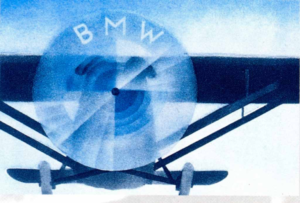
The BMW logo was designed in 1917 and has made no major changes since then. The logo is a constant reminder of where BMW originated. The blue and white colors in the BMW logo were borrowed from the blue and white panels of the Bavarian flag. However, many people have a different idea of what inspired the BMW logo. 

Many people think the logo is a reference to the rotating airplane propeller, dating back to BMW’s days as an aircraft manufacturer. This is mainly because of a BMW advertisement published in 1920 using the BMW logo as a spinning propeller.

Author: Omega Fumba

10 Things You Didn’t Know About the MINI Cooper

Date Published: November 10, 2020

It’s easy to look at the general facts of a car and assume you know enough. However, there are a few interesting facts about the Mini Cooper that you didn’t know about.

1. The Mini Cooper did not change for 41 years

The design of the Mini Cooper was loved so much by the designer and the public, so much that the design of the Mini made no major changes for over 41 years. It is very uncommon for a car to stick to one design for so many years but, Alec Issigonis, the designer of the Mini Cooper insisted that this was the right move to make.

2. It was Originally owned by Rover group until BMW bought it

Rover Group, a British car manufacturer, was the original owner of the Mini. Mini Cooper was not always called Mini Cooper as the Rover group had originally named it ‘the Mini’. 

3. It inspired the mini skirt

Mary Quant was one of the iconic women who paved the way for the mini skirt to become one of the biggest trends to exist in the fashion industry. She took the idea from the ‘Mini’. She might not have been the one to come up with the original idea for the mini skirt, but she used this concept to boost her brand image.

4. David Bowie created a mirror plated mini

In 1999 a celebration was held at the Design museum in London to celebrate the 40th anniversary of the original Mini. David Bowie was a participant in this celebration and he decided to have his Mini covered in reflective mirrors. David Bowie was one of the most influential musicians. His reason for choosing this design was based on the idea that cars are a part of their surroundings.

Anyone who laid eyes on the masterpiece would become a part of the vehicle itself as their own faces were reflected back at them in the mirrors.

5. The 2008 MINI Cooper Life Ball Is One-Of-A-Kind

This Mini Cooper was the only MINI Cooper of its kind. It was produced and created for a charity event. A company called Agent Provocateur assisted in the design before it was auctioned off online through eBay. The money that was made was used to help combat AIDs and HIV. The Mini Cooper was auctioned off at €45,000.

6. The largest official convoy ever formed involved 269 cars

The largest Mini Cooper convoy that was recorded by the Guinness Book of World Records was in 2007. This event was The event was created by Vancouver MINI Club and they had a turnout of 269 cars.

7. The Original Mini Had Sliding Windows

Alec Issigonis, the designer of the Mini Cooper, decided to add sliding doors into the Mini Cooper to create more space. 

8. The Storage In The Doors Was Designed To Hold A Bottle Of Gordon's Gin

The extra space in the unique design of the sliding windows was created to hold a bottle of this specific gin. Alec Issigonis was clearly a big fan of Gordon’s Gin.

9. The World Record For How Many People Can Fit Inside Of It Is 28

The world record for the amount of people who can fit into a Mini Cooper is 28. This world record was achieved by a group of gymnasts from Sussex, England. Given how small a Mini Cooper is, it is no wonder why this world record is a big deal. 

10. The First Generation Had an Ashtray, instead of a Radio

The designer of “The Mini” was not only a fan or Gin but he was also a big smoker. Issigonis had a large Ashtray installed instead of a radio. It is very clear where his priorities were at the time.

The interesting facts mentioned above might not be life changing, but I’m sure most of us have learnt something new about the Mini Cooper.

Author: Omega Fumba 

Top 10 greatest BMW engines

Date Published: October 29, 2020

BMW has a long lasting reputation for making some of the best performance engines from sport cars to aircraft to electric innovations. It is clear that BMW has proven their value in creating outstanding models. However, the big question still remains. Which BMW engines are the greatest of all time? Here is a list of some of the greatest BMW engines.

1.The inline 6-cylinder BMW Illa aircraft engine (1917)

In 1917, shortly after the foundation of the Bavarian Engine Works – or “Bayerische Motoren Werke,” or BMW as we know it , the first BMW engine was developed. Engineers developed the BMW IIIa aircraft engine. 

2. The 2-cylinder boxer engine in the BMW R 5 motorcycle (1936)

BMW is one of the most diverse car brands of all time. BMW went from producing aircraft engines to producing motor vehicle and motorcycle engines. The BMW R5 is powered by a 30-cubic-inch (500 cc) boxer engine with an impressive power output for the time of 24 hp. The R 5 is said to be one of the most reliable engines produced by BMW.

3. The inline 6-cylinder engine in the BMW 328 (1986)

The 6-cylinder engine is one of the engines that created the long lasting reputation of BMW as a sporty vehicle. This sports car was a real machine, having the ability to hit up to 5000 revolutions per minute, the BMW 328 was a real beast!

4. The V8-cylinder engine in the BMW 502 (1954)

The BMW 502 is well known for its sweeping lines and curving body, it is also popularly known as the “Baroque Angel”. The V8 engine was one of the first mass-produced engines in the world. Many authorities were impressed with the BMW 502 and found it to be very reliable hence police and fire departments used the car as an emergency vehicle. 

5.The 4-cylinder turbo engine in the BMW 2002 Turbo (E20) (1973)

This model was the first mass-produced European car with a turbocharger. In it’s time, an engine with a turbocharger was not very common. Today, the turbocharger is an important technology to make car engines even more efficient.

6. The inline 6-cylinder engine in the BMW 3.0 CSL racing coupe (E9) (1974)

At the end of the 1980s the multi-valve became popular: the four-valve tech from auto racing was increasingly being used in mass production. While the mass-produced version of the engine in BMW 3.0 CSL racing coupe was a two-valve producing horsepower(hp) of up to 206, the racing version had a four-valve cylinder, producing up to 440 hp. Today, multi-valves have become more common in engine design and allow us to save resources as we drive.

7. The 4-cylinder turbo engine in the BMW Formula 1 racing car (1983)

The BMW Formula 1 racing car engine paved the way for today’s downsizing method in designing engines. The downsizing method is the shrinking of engines without losing performance. This particular engine is only 92 cubic inch (1.5 liter) in size and was rumored to have reached 1200hp in training sessions.

Considering the fact that this was before electronic driver assistance systems, the performance of this engine was iconic and paved the way for many engines that exist today.

8. The 6-cylinder diesel engine in the BMW 524td (E28) (1983)

After BMW had been creating engines for 60 years, it was time that they made their mark with a mass-produced diesel engine in BMW 5 series. Diesel was once only used in tractor and trucks,  but became more acceptable for cars. The BMW 524td offered sheer driving pleasure and paved the way for many diesel engines that exist today. 

9. The V12-cylinder engine in the BMW 750i (E32) (1987)

The V12-cylinder engine in the BMW 750i (E32) has one of the greatest reputations for engine smoothness. In order to test out the smoothness of this engine, a coin was placed on the edge of the engine while it was running and it did not fall off. The V12-cylinder engine in the BMW 750i (E32) set the tone for electric engines where “smoothness” is a key feature. 

10. The hybrid 3-cylinder engine and electric engine in the BMW i8 (I12) (2014)

The BMW i8 engine is powered by both an electric and a gasoline engine. The hybrid 3-cylinder engine and electric engine has the horsepower reach of 362. The combustion engine drives the rear wheels, while the electric engine takes care of the front axle. In 2019, the BMW i8 Plug-in hybrid won the Engine of the year award for the fifth year in a row.

Author: Omega Fumba

BMW: coronavirus will affect new car demand for the rest of 2020

Date Published: October 17, 2020

Oliver Zipse, the Chairman of the Board of Management of BMW says that the coronavirus will most likely affect the demand for new cars for the rest of 2020.

“It is clear that automotive demand in countries that have been hard hit by the pandemic, like Spain, Italy and the UK, will probably remain relatively low for the rest of the year.” – says Zipse

Since most countries were under lockdown restrictions, industries such as the motor industry have been affected in an unpleasant manner. Factories and car dealerships were shut, causing a delay in production and car sales.

Coronavirus and the car world

Coronavirus: How can the car industry hope to recover?

As infection rates have decreased, business is slowly getting back to normal. There is hope for the car industry to recover. This might take a while, due to the effect that COVID-19 had on the economy. Many people lost their jobs and buying a brand new car might not necessarily be a priority right now. 

The car industry is heavily reliant on China. 80% of global car production involves “made in China” parts. As China is carefully reopening it’s economic activity, there is hope for the car industry.

Niu Technologies, an electric scooter firm has reported on big rises in sales. The electric scooter sales were reported to be up by 61% ,which was boosted by strong sales in China.

BMW Group sales were down 20.6% globally in the first three months of 2020, including an 18% decrease in sales in Europe. But Zipse noted that global sales fell by 44% in April.

Author: Omega Fumba

BMW Made its First Electric Car in 1972

Date Published: October 14, 2020

In 1972, BMW took its first major step into the world of electric cars by introducing the 1602e. It took about 40 years for BMW to produce a fully functional electric car. Here is BMW’s electric car journey.

First BMW electric car was built 48 years ago

BMW 1602e

The BMW 1602e paved the way for the likes of the i3 and the i8. The 1602e was shown off in Munich where the car was used to lead long-distance runners at the 1972 Olympics.

Here are some of the interesting facts about the 1602

  • 12 normal 12V car batteries in, but they were all combined to function as a single, massive cell. Put together, the batteries weighed 771 lbs. 
  • The batteries used were lead-acid type batteries. The lightweight lithium-Ion battery technology that is used a lot today was not available back then.
  • The batteries were combined with an electric motor from Bosch. However, the car only had a limited range of just 37 miles.
  • Only two secret prototypes were built.
  • The 1602 had no means of charging, so the batteries needed to be switched out to keep running. 

Does BMW have a fully electric car?

The BMW i3 is BMW’s first fully electric car. Even though this was BMW’s first fully electric car. It certainly was not the first attempt. Here is a list of BMW electric cars the came before the success of the i3:

  • BMW 1602 (1972)
  • BMW LS Electric (1975)
  • The BMW LS Electric had a plug to charge. This model took 14 hours to charge and could only go 19 miles on a single charge.
  • BMW 323xi (1987)
  • The electric 325xi was able to go 93 miles on one charge.
  • BMW E1 (1991)
  • The BMW E1 was able to go 100 miles on a single charge. However, because of cost issues, the E1 project was scrapped. The E1 used an aluminum shell and plastic body panels, making it the true predecessor to the i3.

When did BMW build an all electric concept vehicle?

The 1991 BMW E1 is known as the predecessor of the BMW i3. Even though the E1 was scrapped, it was BMW’s first purpose-built all electric car.

Author: Omega Fumba